
2010 Free Lakota Bank Two 1 oz. 999 Fine Copper Round Crazy Horse / Bison
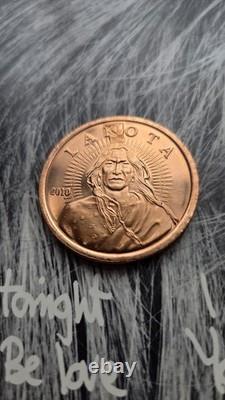
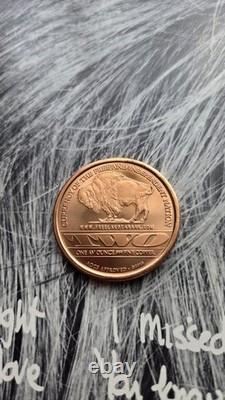
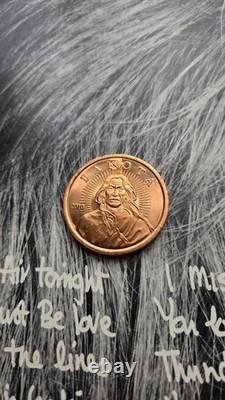
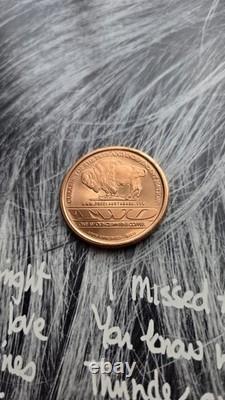
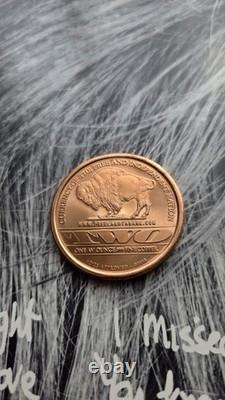
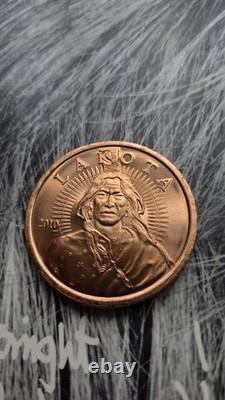
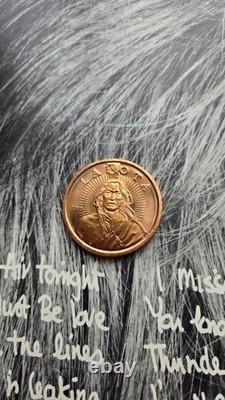
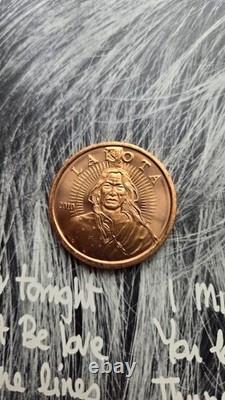
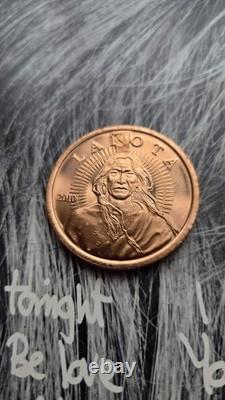
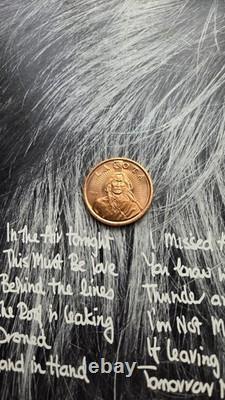
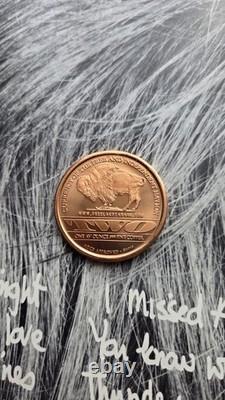
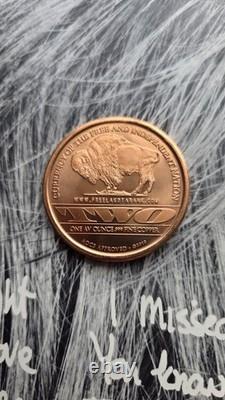
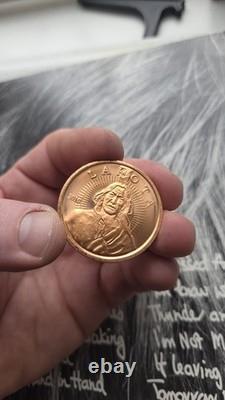
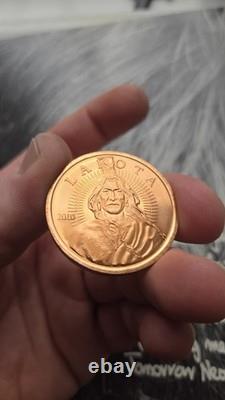
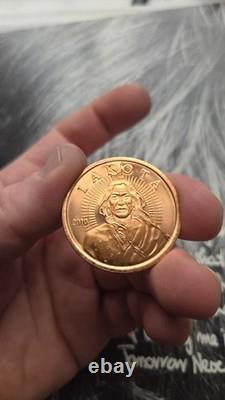
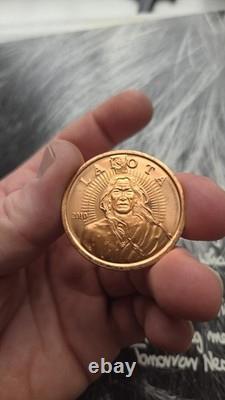
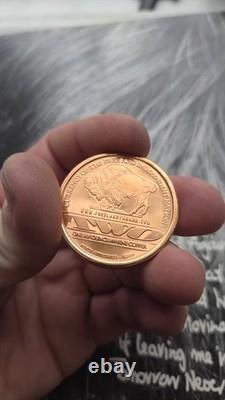
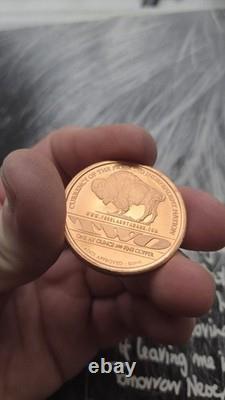
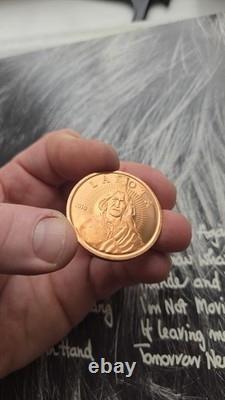
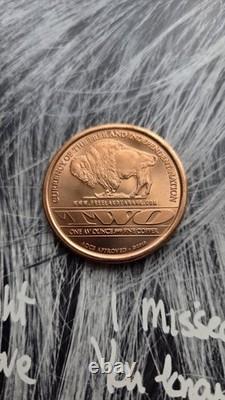
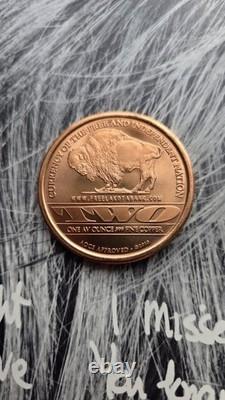
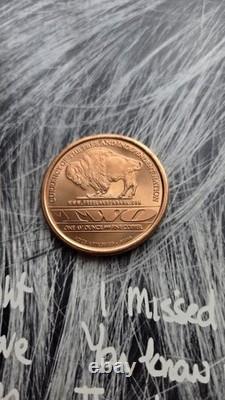

Up for sale is a sharp 2010 Free Lakota Bank "Two" containing a full 1 avoirdupois ounce of. This is the Crazy Horse / Lakota portrait issue paired with the bison reverse - clean fields, strong strike, and attractive original copper color and luster. These copper rounds were produced alongside the better-known silver series and remain interesting pieces of private currency history. Issuer: Free Lakota Bank (Republic of Lakotah). Finish: Brilliant Uncirculated / Proof-like.
Catalog: X#1 (Unusual World Coins). Obverse: Portrait of the legendary Lakota warrior Crazy Horse (with radiating eagle feathers / sunburst elements and "LAKOTA" / date). One side shows the detailed standing figure with rifle and raised fist labeled CRAZY HORSE 1840 - 1877. The Free Lakota Bank and the Lakota Struggle. In December 2007, the Lakota Freedom Delegation - led by the late Russell Means - formally withdrew from the United States and declared the free and independent Nation of Lakotah. The following year they launched the Free Lakota Bank, a private institution that dealt in physical silver and gold (and also issued copper rounds).These rounds were issued as part of that effort. Struck to private-currency specs under the American Open Currency Standard (AOCS), the silver pieces denominated "Fifty, " 1 troy oz. 999 silver and copper pieces denominated "Two, " 1 AV oz. 999 copper were meant to be recognized and traded by those who accepted Free Lakota and other AOCS currencies. The series ran from 2008 through 2013.
In late 2013 the series was retired, the website went dark, and the bank wound down its original operations. South Dakota regulators had already warned the public that it was not a licensed bank and had no official connection to the Oglala Sioux Tribe.
Leonard Peltier, the Lakota Struggle, and Native Resistance. The broader story of Lakota and Native American resistance is inseparable from the name Leonard Peltier. Born in 1944 on the Turtle Mountain Indian Reservation in North Dakota (of Lakota, Dakota, and Anishinaabe descent), Peltier became a prominent member of the American Indian Movement (AIM) in the 1970s. The years leading up to 1975 were marked by intense conflict on the Pine Ridge Reservation. Traditionalists and AIM members clashed with the tribal government of Dick Wilson and his Guardians of the Oglala Nation (GOON squad). Wilson's administration was widely accused of favoritism, misuse of tribal funds, and using the GOON force - which received BIA support and was staffed in part by tribal police - to intimidate and attack political opponents. Between 1973 and 1976, scores of unsolved violent deaths occurred on the reservation amid the fighting between Wilson's supporters and AIM/traditionalists. On the day of the June 26, 1975 shootout at the Jumping Bull ranch, Wilson signed away roughly one-eighth of the reservation's land. Pine Ridge and the surrounding Black Hills region held significant uranium deposits; by the mid-1970s numerous mining companies were staking claims. Many in AIM and among traditionalists viewed the land transfer and the surrounding violence as tied to federal and private interest in those mineral resources.The Black Hills themselves had been taken decades earlier under the 1877 Act that implemented a 1876 "agreement" signed by only about 10% of adult male Sioux - far short of the three-fourths required under the 1868 Fort Laramie Treaty. Supreme Court later ruled the taking required compensation, which the Lakota have refused, continuing to demand return of the land. On June 26, 1975, a shootout erupted when two FBI agents (Jack Coler and Ronald Williams) entered the area seeking a fugitive.
The agents were wounded and then killed at close range; AIM member Joe Stuntz was also killed. His extradition relied in part on affidavits from Myrtle Poor Bear, who claimed to have witnessed him shoot the agents. Poor Bear later recanted, stating she had been coerced by FBI agents, was not present, and had never met Peltier. Those affidavits were not used at trial (she was deemed incompetent to testify), but they helped secure his return from Canada. At trial, the key ballistics evidence was a.223 casing found in one agent's trunk, linked by extractor marks to an AR-15 associated with Peltier. Later FOIA documents included an October 1975 FBI teletype stating that the recovered AR-15 had a different firing pin than the weapon used at the scene. Appellate courts noted the government had withheld evidence and intimidated witnesses; one 1986 opinion stated there was a possibility the jury would have acquitted Peltier had the withheld material been available.
Two co-defendants were acquitted on self-defense grounds. Peltier was convicted in 1977 of two counts of first-degree murder and sentenced to two consecutive life terms. The FBI and successive courts have maintained the conviction; Peltier and his supporters have maintained he was framed. Campaigns for his release involved Amnesty International, the UN, celebrities, tribal leaders, and generations of Native activists. In December 2000, as President Clinton considered clemency, roughly 500 current and former FBI agents marched two-by-two to the White House in an unprecedented public protest, carrying a "Never Forget" banner and petitions signed by thousands of law enforcement officers opposing any release.In one of the final acts of his presidency, on January 20, 2025, President Joe Biden commuted Peltier's sentence to home confinement. He continues to seek full clemency. A major new documentary, Free Leonard Peltier (directed by Jesse Short Bull and David France), premiered at Sundance in 2025 and began streaming on Netflix on October 12, 2026.
The film covers Peltier's life, the Pine Ridge events, the decades-long campaign for his freedom, and the wider arc of Indigenous activism - from boarding schools and the 1970s AIM actions to the present day. This 2010 Free Lakota Bank copper round is not an official tribal issue of the Oglala Sioux or any federally recognized tribe. At the same time, it sits within the longer continuum of Lakota and Native efforts to assert economic and political independence - a continuum that includes the activism of people like Russell Means and Leonard Peltier. The piece has never been cleaned or altered.
It is a solid original example exactly as shown in the photos. Check out my other silver coins and cool collectibles.